


 Deutsch
 English
 Español
 Français
 Nederlands
 Português


 Share
Share




The World Economic Forum's Global Risks Report 2026 has ranked geoeconomic confrontation as the world's top risk for the first time, signaling a profound shift in how nations and corporations approach global trade. With US-China tariff escalation pushing effective rates above 50% on key sectors, the old just-in-time supply chain model is giving way to a triple-redundancy framework that is permanently rewiring the global economic order.
WEF 2026: A New Risk Landscape
Published in January 2026, the 21st edition of the WEF Global Risks Report draws on the Global Risks Perception Survey and Executive Opinion Survey. Geoeconomic confrontation tops the near-term risk list, cited by 18% of respondents, followed by state-based armed conflict (14%) and extreme weather events. Over half of respondents expect a turbulent or stormy global outlook over the next two years, rising to 57% over the decade. The report warns that "armed conflict, economic weaponization, and social fragmentation are already interacting", stressing the need for dialogue and resilience. Non-environmental risks like misinformation and societal polarization are projected to dominate policy attention in the short term, while environmental threats remain the most severe over the ten-year horizon.
Tariff Escalation: The New Normal
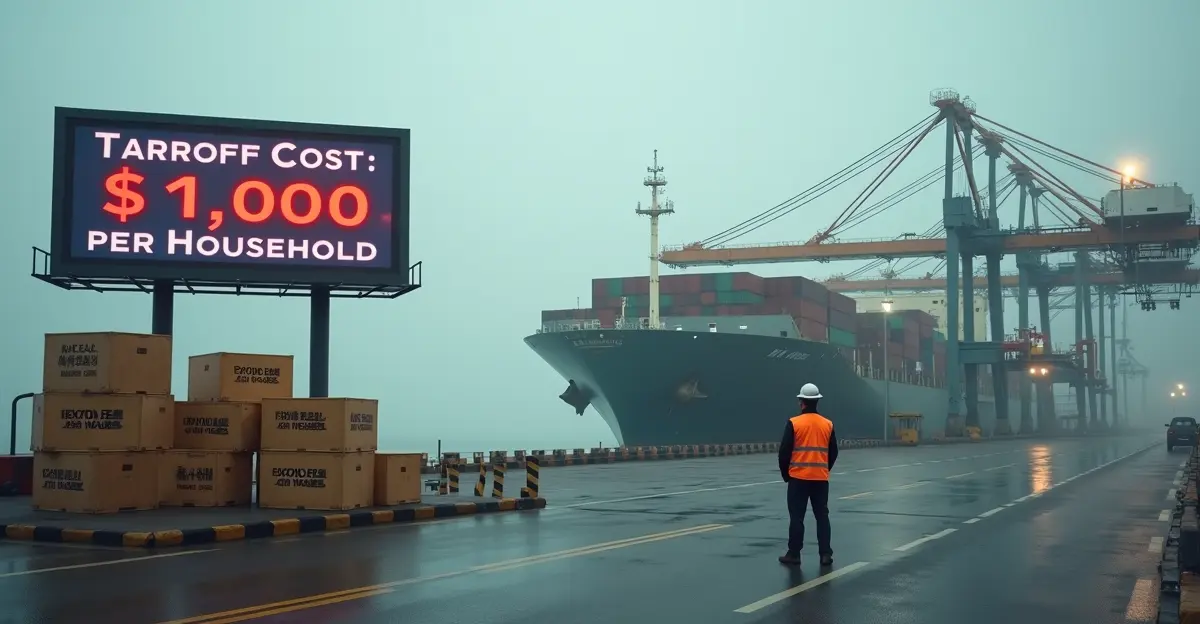
As of mid-2026, the blended US tariff on Chinese imports averages approximately 33%, stacked across multiple layers: MFN base rates (~3.4%), Section 301 tariffs (7.5–100%), the IEEPA fentanyl tariff (20%, though struck down by the Supreme Court in February 2026), and a temporary 10% Section 122 global tariff. For strategic sectors, rates are far higher: electric vehicles and lithium-ion batteries face 110–145%, effectively excluding them from the US market. Consumer electronics face 30–55%, industrial machinery 25–50%, and solar products 50–80%. China has retaliated with reciprocal tariffs, rare-earth export controls, and targeted sectoral actions. The US-China tariff war shows no signs of de-escalation, with 76% of trade professionals viewing tariffs as permanent, according to the KPMG 2026 Tariff Survey.
The Rise of Triple Redundancy
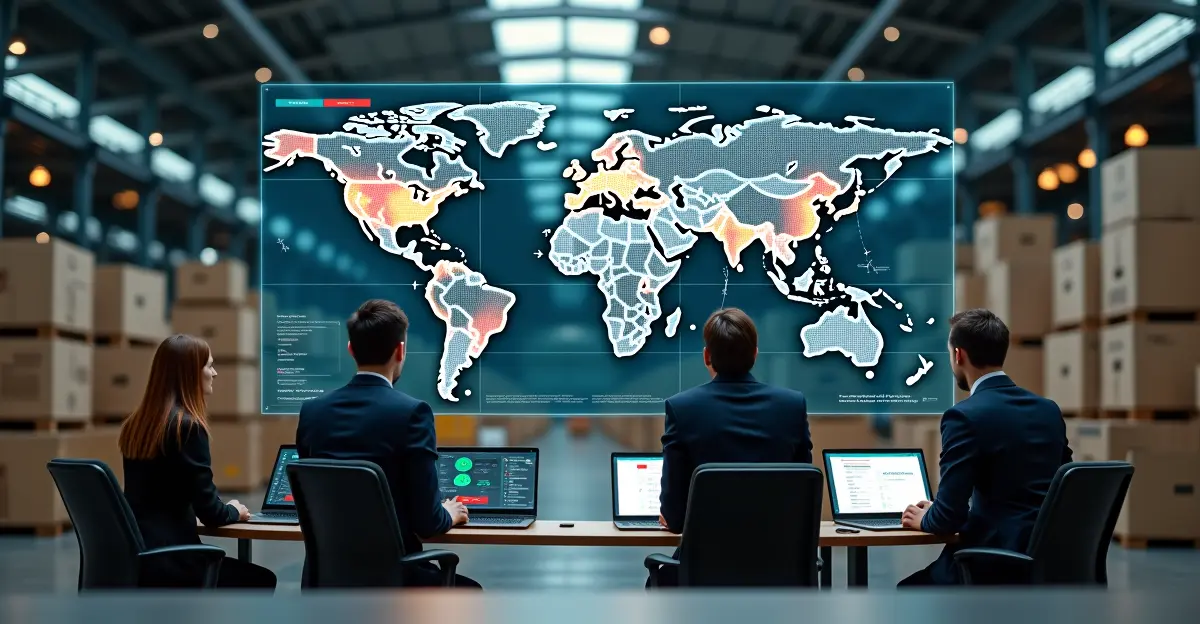
In response, 78% of Fortune 500 companies have implemented formal supply chain resilience strategies, abandoning the just-in-time model for a triple-redundancy framework: geographic diversification, supplier backups, and inventory buffers. This shift raises costs by 15–25%, but reduces strategic dependence on any single node. Companies are building multi-node, multi-path architectures that can flex across regions. According to the Forbes Business Council, Fortune 500 leaders are moving toward a "performance chain" model designed for permanent disruption, using AI-powered digital twins to simulate disruptions and network optionality as a design principle. The supply chain resilience strategies adopted by multinationals now prioritize speed-to-market, cost discipline, and regulatory compliance across three primary hubs: North America, Southeast Asia, and Europe.
Winners and Losers of the Nearshoring Boom
Mexico has emerged as the biggest winner, surpassing China as the top US trading partner with $820 billion in bilateral trade in 2025. Mexico attracted approximately $40.9 billion in FDI through Q3 2025, already exceeding the full-year 2024 total. Vietnam offers competitive labor rates, a growing skilled workforce, and favorable trade agreements like the CPTPP. India recorded 142 new manufacturing projects worth $38 billion in Q1 2026 alone. Poland ranks third globally in nearshoring attractiveness, benefiting from proximity to the EU market. China, meanwhile, faces reduced market access and is pivoting toward domestic consumption and Belt and Road markets. The IMF warns that friendshoring could add 0.5–1.0 percentage points to global inflation, as the efficiency gains of globalization are replaced by resilience premiums.
The USMCA Sunset Review: A Pivotal Moment
On July 1, 2026, the United States, Mexico, and Canada will conduct the first mandatory joint review of the USMCA, which governs $1.8 trillion in annual trilateral trade. Under Article 34.7, unanimous consensus triggers a 16-year extension to 2042; failure to agree launches annual reviews that could lead to expiration by 2036. The review will directly affect automotive rules of origin (currently 75% regional value content), energy market access, and restrictions on Chinese-origin components. Trade analysts at CSIS and the Baker Institute consider full renewal with targeted revisions the most probable outcome. However, the USMCA 2026 review occurs amid heightened tensions: the US imposed 25% tariffs on Canada and Mexico in March 2025, citing border security concerns, though USMCA-compliant goods were later exempted. For manufacturers, key actions include conducting rules of origin audits before July 2026, reviewing supply chains for Chinese-origin components, and engaging with industry groups during the consultation phase.
Middle Powers Forced to Choose Sides
The fragmentation of global trade into competing blocs is forcing middle powers to make difficult strategic choices. Countries like Vietnam, India, and Indonesia are positioning themselves as neutral manufacturing hubs, but face pressure from both the US and China to align on technology standards, investment screening, and export controls. The EU's fully implemented Carbon Border Adjustment Mechanism (CBAM) adds another layer of complexity, effectively taxing imports based on their carbon footprint. The geopolitical alignment of trade blocs is creating a world where supply chain decisions are increasingly driven by geopolitical compatibility rather than pure economic efficiency. The KPMG survey found that 26% of large firms are actively reshoring, while 39% absorb tariff costs — a strategy that may prove unsustainable if tariffs persist.
Expert Perspectives
"The shift from efficiency to resilience is the most significant structural change in global trade since the creation of the WTO," says a senior trade analyst at the Peterson Institute. "Triple redundancy may raise costs, but it reduces the risk of catastrophic supply chain failure in an era of permanent disruption." The WEF report echoes this, calling for collective action to manage the risks of fragmentation. However, critics argue that the new supply chain order benefits large multinationals at the expense of smaller firms, which lack the resources to build redundant networks.
FAQ
What is geoeconomic confrontation?
Geoeconomic confrontation refers to the use of economic tools — tariffs, sanctions, export controls, and investment screening — as instruments of geopolitical strategy. The WEF Global Risks Report 2026 ranks it as the top near-term global risk.
What is triple redundancy in supply chains?
Triple redundancy is a resilience strategy where companies maintain three independent supply chain nodes (e.g., in North America, Southeast Asia, and Europe) to ensure continuity if one node is disrupted. It typically increases costs by 15–25%.
When does the USMCA sunset review start?
The USMCA's first mandatory joint review begins on July 1, 2026. Unanimous consensus among the US, Mexico, and Canada would extend the agreement to 2042; failure to agree triggers annual reviews that could lead to expiration by 2036.
Which countries are winning from nearshoring?
Mexico, Vietnam, India, and Poland are the biggest winners. Mexico surpassed China as the top US trading partner in 2025, while India saw $38 billion in new manufacturing projects in Q1 2026.
How do tariffs affect consumers?
Higher tariffs increase import costs, which are often passed on to consumers as higher prices. The IMF warns that friendshoring could add 0.5–1.0 percentage points to global inflation.
Conclusion
The geoeconomic confrontation identified by the WEF as the top global risk for 2026 is not a temporary disruption but a structural transformation. The triple-redundancy supply chain model, while costly, is becoming the new baseline for corporate resilience. The USMCA sunset review in July 2026 will test whether regional trade blocs can adapt to this fragmented landscape or whether further disintegration lies ahead. For businesses and policymakers alike, the era of frictionless globalization is over; the challenge now is to build a resilient, if more expensive, global trading system.
Sources
- World Economic Forum, Global Risks Report 2026
- KPMG 2026 Tariff Survey
- CSIS Analysis of USMCA Review
- Forbes Business Council, "From Supply Chain to Performance Chain" (April 2026)
- USMCA Article 34.7 Joint Review Provisions


Follow Discussion